
Yerba Mate – An introduction
Posted on February 2, 2022, by Tim Stoneham in Tea News World of Tea .
Yerba Mate – An introduction
Yerba Mate has been a feature in our shop in Bath, Somerset since we opened in 2005, however, we’ve found that some people are still unsure or have not heard of this wonderful herb from South America!
So what is Yerba Mate?

It’s a traditional South American caffeine rich drink. Indigenous to the southern continent the plant can grow up to 15 meters tall! The leaves are harvested together with the branches, which are first left to dry and then crushed. Afterwards the stems are removed before an aging process is commenced which can last from at least 1 month to a year. During this time the leaves must be kept at a constant temperature of around 50-60°C. At the end of this process you have what we know as Green Mate or Yerba Mate.
It was first consumed by the indigenous Guaraní who were based in what we now know as modern day Paraguay and by the Tupí people. The tradition and popularity of Mate continues to today!
Despite how it’s spelt it’s not pronounced ‘Mate’, as in the English ‘I have a good mate’. Instead you pronounce both syllables – the ‘ma’ is soft and the ‘te’ is a little harder. Sometimes it’s spelt maté in English to show the change in pronunciation. However, in Spanish maté actually means ‘I killed’! So it’s best to stick with the original spelling!
Health Benefits
Yerba Mate has been associated with many health claims; most of which have been attributed to the high quantity of polyphenols found in the beverage. It’s often recommend for travellers in South America that are suffering from altitude sickness. In recent years it has grown in worldwide popularity due to famous football players posting about it on their social media feeds.
Unlike tea, Mate has a low tanine content; this allows for it to be brewed strong without the bitterness that can be associated with some teas.
Mate is known for its stimulating effect as it contains caffeine, theophylline and theobromine, all well known stimulants. It’s often compared to coffee in terms of caffeine content. However, the average cup of mate contains around 80 milligrams of caffeine compared to 100 to 200 milligrams in a cup of coffee. One of the most notable differences between drinking a cup of coffee and Mate is the time it takes for the caffeinated energy to be released. Coffee offers a quick release and is sometimes associated with a rapid drop in energy. However, Mate offers a much slower release of the caffeine so you don’t experience that sudden drop as it wears off.
How to drink Mate
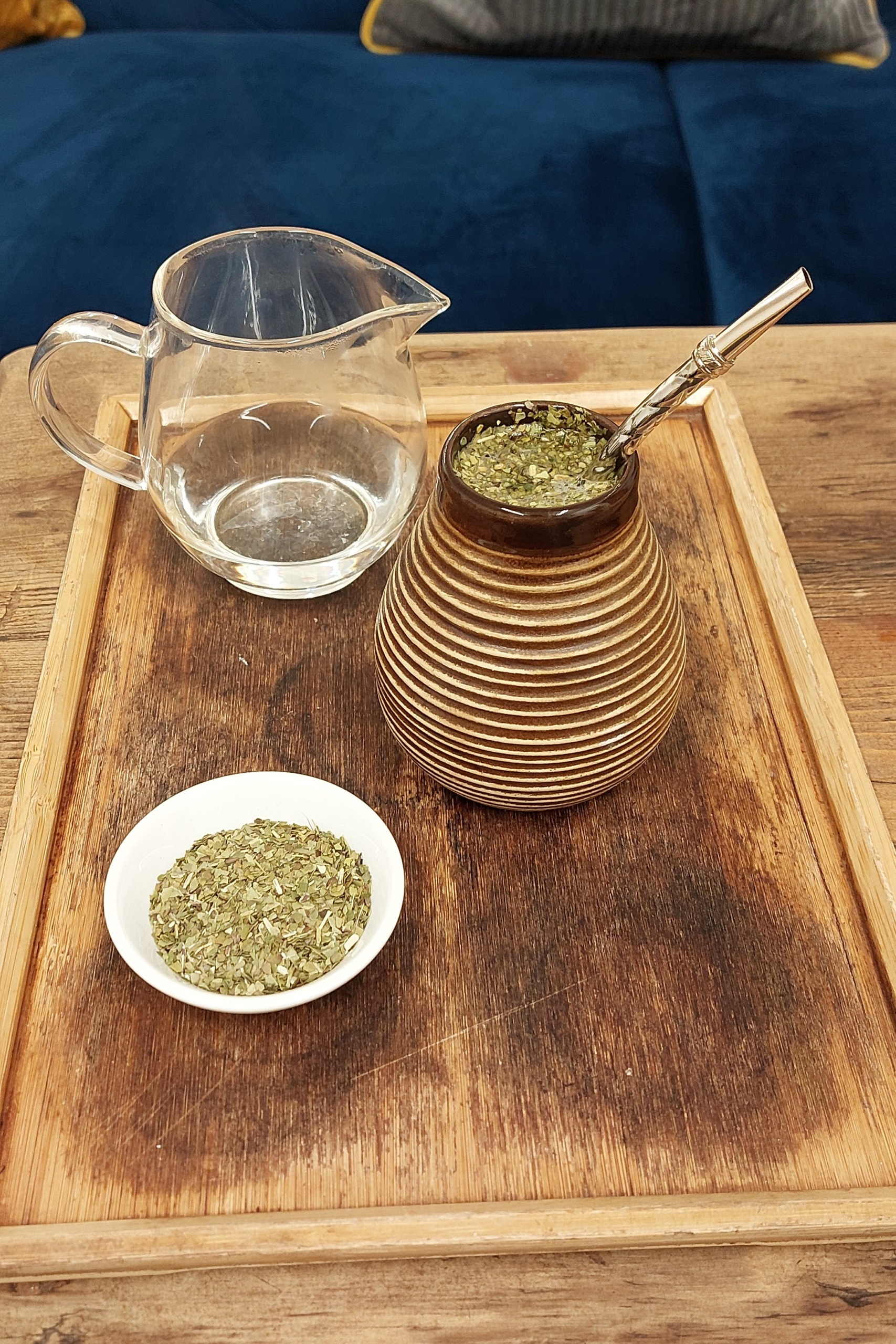
Traditionally Mate is drunk through a metal or bamboo straw from a shared, hollowed out calabash gourd and can be served either hot or cold. When you use the term Mate, this refers to the hot beverage and when you use the term Tereré this means ice cold water. If you do not have a bombilla or gourd that’s ok! You can brew Mate in a ‘western style’ in your teapot or mug. Yerba Mate should be treated in a similar fashion to green tea – using water just off the boil at around 80°C.
‘Western’ Brewing.
1. Add a teaspoon of Mate (2g) per mug to your infuser.
2. Use water around 80°C. You can achieve this by either freshly boiling water and allowing it to cool for around 5mins or using a temperature controlled kettle.
3. Brew for around 3-5mins (depending on how strong you would like it).
Traditional Gourd Brewing

1. Add the mate to your Gourd filling around 1/3rd of it.
2. Using water around 80°C fill the gourd up to the rim.
3. Drink the mate through the bombilla (straw).
It is customary for the host to drink the first infusion of Mate. Once they are finished the gourd is topped up with more water and is passed to the next guest. This is continued until everyone has had their fill.
Nowadays ceramic calabash’s are available. However, if you are using a hollowed out gourd it is important once you’re finished to remove the used leaves and clean it so no rot develops inside the gourd.
Yerba Mate, like teas and coffees, comes in different flavours and can be brewed in many different ways!